







How to Choose the Right Bulldozer for Your Project
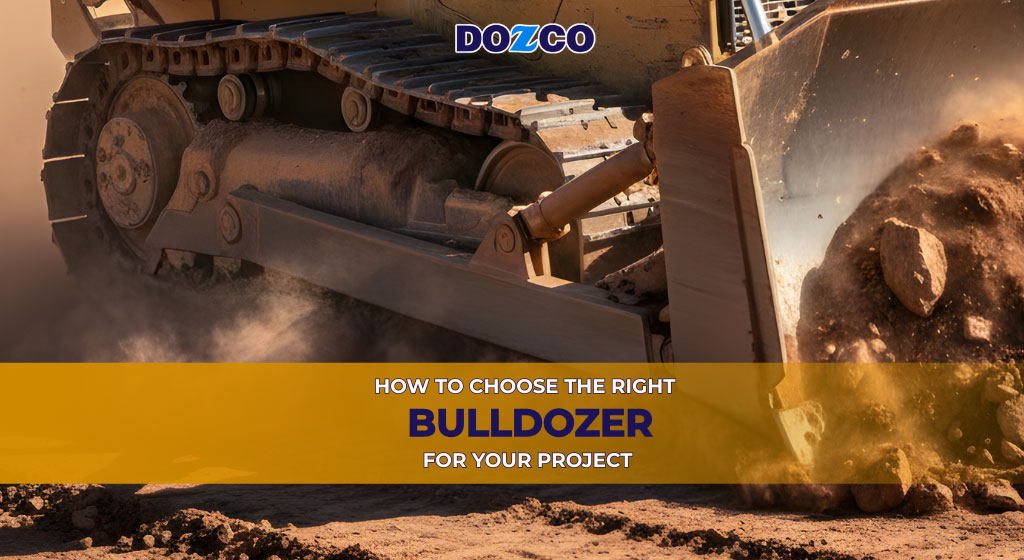

How to Choose the Right Bulldozer for Your Project
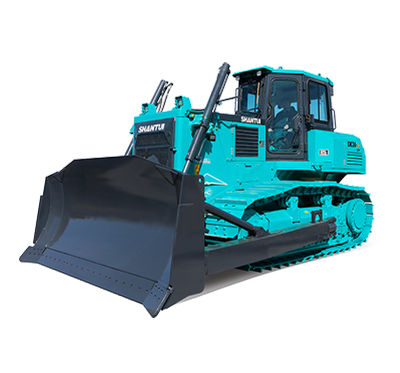
Construction and infrastructure sectors have experienced unprecedented growth with tremendous demand for bulldozers, or dozers, or track dozers. A bulldozer (often shortened to ‘dozer’) gets its name from the word ‘bulldoze,’ meaning to push through forcefully. It is a heavy tracked vehicle with a massive front blade for moving rocks, earth, and debris. They are utilized extensively in construction, mining, agriculture, and infrastructure development.
Choosing the right bulldozer is of prime importance in determining heavy-duty operation productivity. The wide range of work, such as earthmoving, levelling, ripping, and pushing, performed by the dozer, helps to achieve maximum productivity at a lower cost of the operation. Despite the presence of plenty of local and overseas companies bringing products into the market, Shantui Dozers, supported by DOZCO’s country-wide dealership network, has become one of the dependable options in terms of performance, durability, and cost.
Let’s discuss how to make the best choice based on your project requirements, specifically on the most important things to consider when trying to make the most suitable bulldozer.
Types of Bulldozers You Can Choose for Your Project
There are primarily two types of bulldozers you can select for your project:
-
Hydrostatic Dozers (Precision & Efficiency)
Hydrostatic bulldozers use a closed-loop hydraulic circuit with dual pumps and motors that provide stepless speed control, independent track movement, and instant response to load changes. This makes them ideal for fine grading, slope work, and tight job sites.
Models:
- Shantui DH13B3 (134 HP) – This machine ensures efficiency, comfort, and reliability. With advanced controls, easy maintenance access, and adaptability to diverse terrains, it delivers outstanding performance across all working conditions.
- Shantui DH16B3 (170 HP) – This machine delivers efficient performance with ease of operation and maintenance. Its adaptable design, with multiple attachments and low ground pressure, ensures reliability across diverse working conditions.
- Shantui DH17B3 (170 HP) – This machine is compact and responsive and is ideal for precision earthmoving in agriculture, construction and mining. The new ECO Economic Mode improves fuel economy, and the new Driving Response Mode achieves high productivity.
- Shantui DH24C3 (240 HP) – This machine high-output hydrostatic system with intelligent load adaptation; suited for infrastructure, mining and large-area grading. Equipped with a new generation of integrated cab features large space, good vision, tight sealing, less vibration, and low noise.
Technical Advantages:
- In-situ crawling with dual motor drive
- Constant torque at varying speeds
- Up to 15% lower fuel consumption
- Single joystick for travel and blade control
- Modular layout for simplified maintenance
-
Conventional Dozers (Power & Durability)
Conventional models use powershift or torque converter transmissions, offering high drawbar pull and mechanical simplicity. Best for mining, heavy earthmoving, and rough terrain.
Models:
- Shantui SD16E (160 HP) – Mid-size, versatile, and durable.
- Shantui SD32W (320 HP) – Built for tough mining and rock excavation.
Technical Advantages:
- Gear-based mechanical drive for high torque output
- Proven components and rugged structure
- Easier to maintain in remote sites
Bulldozer Working System: Engine, Tracks, Blade & Hydraulics Explained
A bulldozer is a track-type earth-moving machine employed in dozing, grading, and land clearing. The primary systems of a bulldozer include the diesel engine, powertrain / transmission, undercarriage, blade assembly, and hydraulic circuit.
The diesel engine generates high torque at low RPM to drive heavy material. Power is transmitted with a powershift or hydrostatic transmission. Powershift system uses a torque converter, transmission and final drive, while hydrostatic systems use variable-displacement pumps and motors to provide stepless speed and direction control.
The undercarriage is made up of crawler tracks with Crawler Chain, Track Rollers, Carrier Rollers, Sprocket and Idler to ensure maximum ground contact, load carrying, and traction on soft, hard or uneven ground.
The front is equipped with the blade, mounted via push arms and hydraulic cylinders, to push, cut, and level. Blade types vary (straight, semi-U, or U-blade), based on application. The rear ripper, typically a single or triple-shank type for disintegrating hard ground, is typically hydraulically operated.
All implement functions are powered by a high-pressure hydraulic system for responsive, precise movement. Machine functions are controlled by electro-hydraulic joysticks from a sound-insulated, ergonomic cab for all-day productivity.
Bulldozer Applications Across Industries
- Dozing: The most common use is where the blade is used to push material of heavy nature across open land, needed when clearing land or re-depositing soil and rock.
- Leveling: Bulldozers are very good at leveling surfaces on roadbeds, construction sites, and foundations by spreading the material evenly.
- Ripping: With a rear-mounted ripper attachment, dozers can break up hard ground or soft rock and prepare the soil for additional work.
- Towing: The equipment can tow trailers or heavy equipment over hard ground, very handy on large sites.
- Pushing: Other than earth, dozers will push demolition rubble or gravel to designated points at a high and effective rate.
- Ship Loading: Bulldozers assist in the handling of bulk cargoes and the leveling of material in ports to enable easy loading and offloading of products.
- Earth Moving: For big earthmoving or mining operations, the equipment of choice is dozers, whether it is digging, hauling, or moving huge quantities of rock.
- Seaport operations: They are versatile and can be used for material processing, surface finishing, and assisting with container yard management.
Things to Consider When Choosing the Right Bulldozer: Expert Suggestions from DOZCO
- Assess Your Application Thoroughly: Begin by measuring the size, terrain, and material you’ll be handling. This will help you match the appropriate model to the job at hand.
- Prioritize Operator Comfort & Control: Select a dozer that features ergonomic cabin design, easy control systems, and low vibration for safe and extended working hours.
- ROPS/FOPS enabled: Bulldozers by DOZCO are Roll-over protective Structures (ROPS) & Falling-Object Protective Structures (FOPS) compliant cabin, which guarantees safety of operator.
- Leverage DOZCO’s Support Services: With preventive maintenance to easy availability of genuine spare parts, DOZCO provides for seamless and uninterrupted operations through all phases of the project.
Final Thoughts
An investment in the right bulldozer not only enhances productivity but also reduces long-term operating costs. Whether construction, mining, or infrastructure, DOZCO supplies Shantui Dozers that deliver the power, reliability, and functionality necessary for any size project.
From hydrostatic dozers for precision control to traditional drive bulldozers for brute force, there’s a Shantui model to help your company be a success. If you’re planning your next project, reach out to DOZCO for guidance and support in selecting the best track dozer tailored to your operational needs.
Frequently Asked Questions
-
What are the different types of bulldozers used in construction?
Some of the bulldozers are hydrostatic and conventional drive dozers. Each category caters to specific project needs, ranging from high precision grading to heavy earthmoving. Hydrostatic Dozers are more productive and economical.
-
How do I choose the right dozer for my job site?
To select the appropriate dozer, take into account terrain, scale of the job, type of material, size of blade, and power required. DOZCO suggests choosing a model based on performance, fuel economy, and backup.
-
What is the difference between a track dozer and a wheel dozer?
Track dozers provide greater traction and stability on uneven terrain, but wheel dozers are faster on paved or flat ground. Track dozers such as those by Shantui are best for mining, seaports, and heavy sites.
-
Which bulldozer is best for earthmoving and levelling?
Hydrostatic dozers like the Shantui DH24C3 are ideal for precision levelling, whereas standard models like SD32W are sufficiently powerful for heavy earthmoving.
-
Are Shantui bulldozers reliable for long-term use?
Yes. Shantui dozers provide high torque, fuel economy, and low maintenance, ensuring that they are a safe bet for long-term, cost-saving operation.
-
What size bulldozer do I need for small construction projects?
For mini to medium-sized construction, smaller models such as the Shantui HD13B3 / HD16B3 offer great performance at non-excessive operating expense.