







Rock Breaker Maintenance Tips to Improve Performance and Life
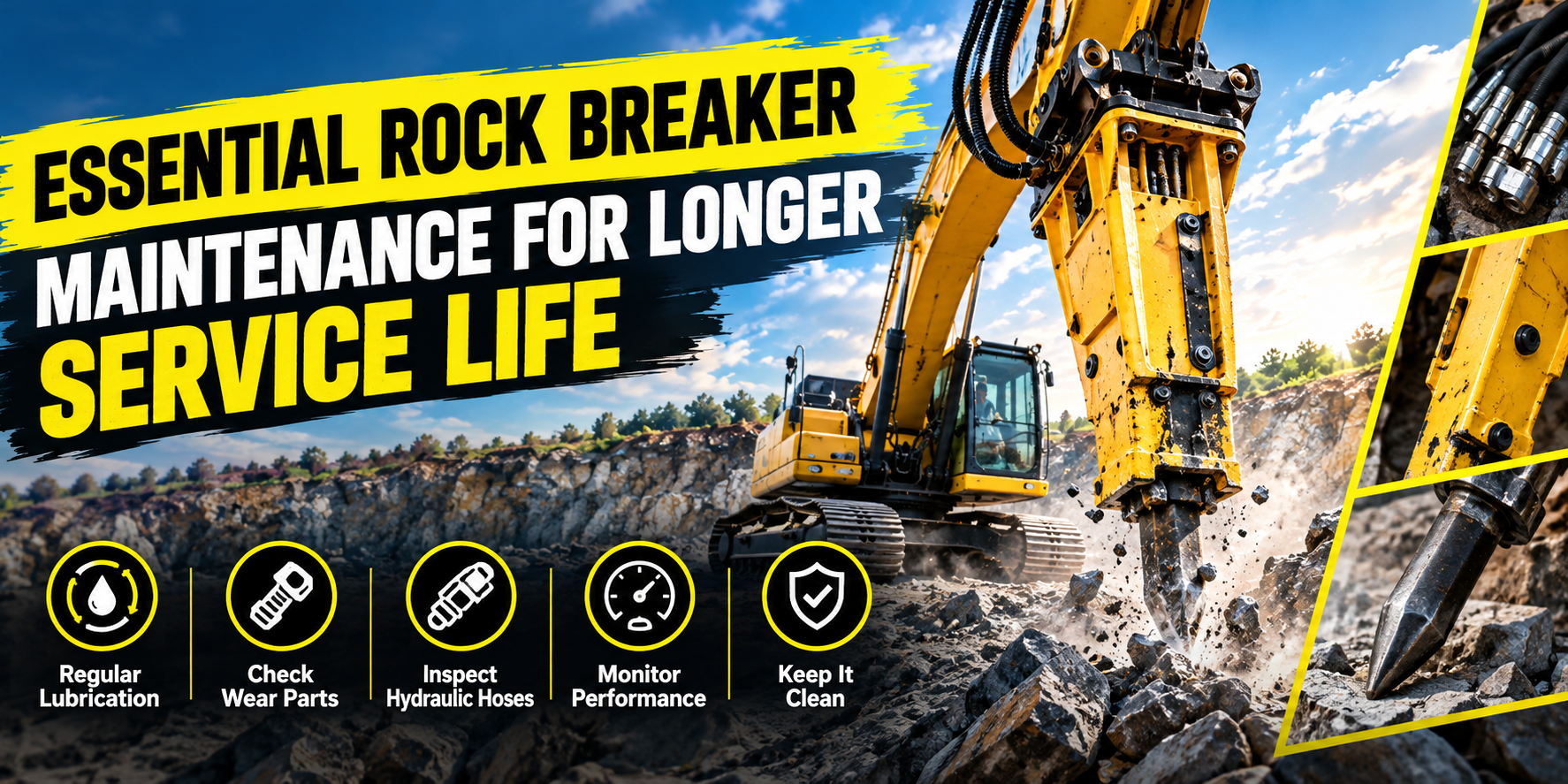
Rock breakers are expensive equipment. They’re investments that need care. Treat one right, and it works for years. Ignore maintenance, and you’re replacing it sooner than planned.
Most operators think maintenance is complicated. It’s not. You need to check things regularly. Keep your fluids clean. Replace parts that wear out. That’s it. Simple stuff.
But here’s the thing. Most crews skip the basics anyway. Then they wonder why equipment breaks. Then they’re stuck on a job with dead equipment. Then they’re paying emergency repair costs that never should have happened.
Rock breaker maintenance tips are straightforward. You don’t need to be a technician. Just pay attention to what you’ve got.
Daily Checks Before Work Starts
Get to the site early. Walk around your breaker before you fire it up. Look at the hydraulic hoses. Are they leaking? Any cracks or damage? Check the connections. Make sure nothing is loose. A hose failure mid-job costs you hours of downtime.
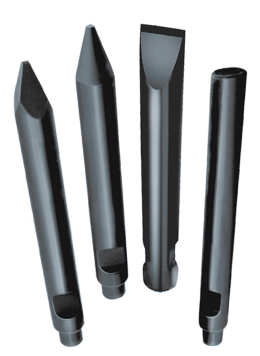
Look at the chisel. A worn chisel reduces efficiency. You’re wasting energy striking with equipment that doesn’t work right. DOZCO breakers use different chisel types. Blunt, Moil Point, Wedge, Conical. Pick the right one for your material and keep it in good shape.
Check the oil level. Low hydraulic fluid means problems. Your breaker won’t strike with full force. The pump works harder. Heat builds up. Everything suffers. Topping off takes five minutes. Skip it, and you’re looking at bigger repairs.
Listen to the breaker when it starts. Normal sound is consistent pounding. Grinding noises mean something is wrong. Squealing indicates hydraulic issues. Pay attention. Your ears tell you things are off before the equipment actually breaks.
Weekly Maintenance Routines
If you’re running the breaker hard every day, swap out the filters weekly. Dirty filters clog up the system. Everything overheats. Seals start failing. A new filter costs next to nothing. A new piston costs thousands.
Inspect the seals around the piston. Look for leaks. Even small drips indicate seal wear. Catching this early means you replace the seal before fluid loss becomes a major problem.
Tighten all bolts and connections. Constant striking creates vibration. Vibration loosens bolts. Loose bolts lead to fluid leaks. Leaks lead to breakdowns. Grab a wrench and go around the attachment systematically.
Check the dampening system. This technology reduces vibration transmitted to your excavator. If it’s not working properly, you’ll notice increased shaking. The operator feels it. The machine suffers. Have a technician inspect it if something seems off.
Hydraulic System Care
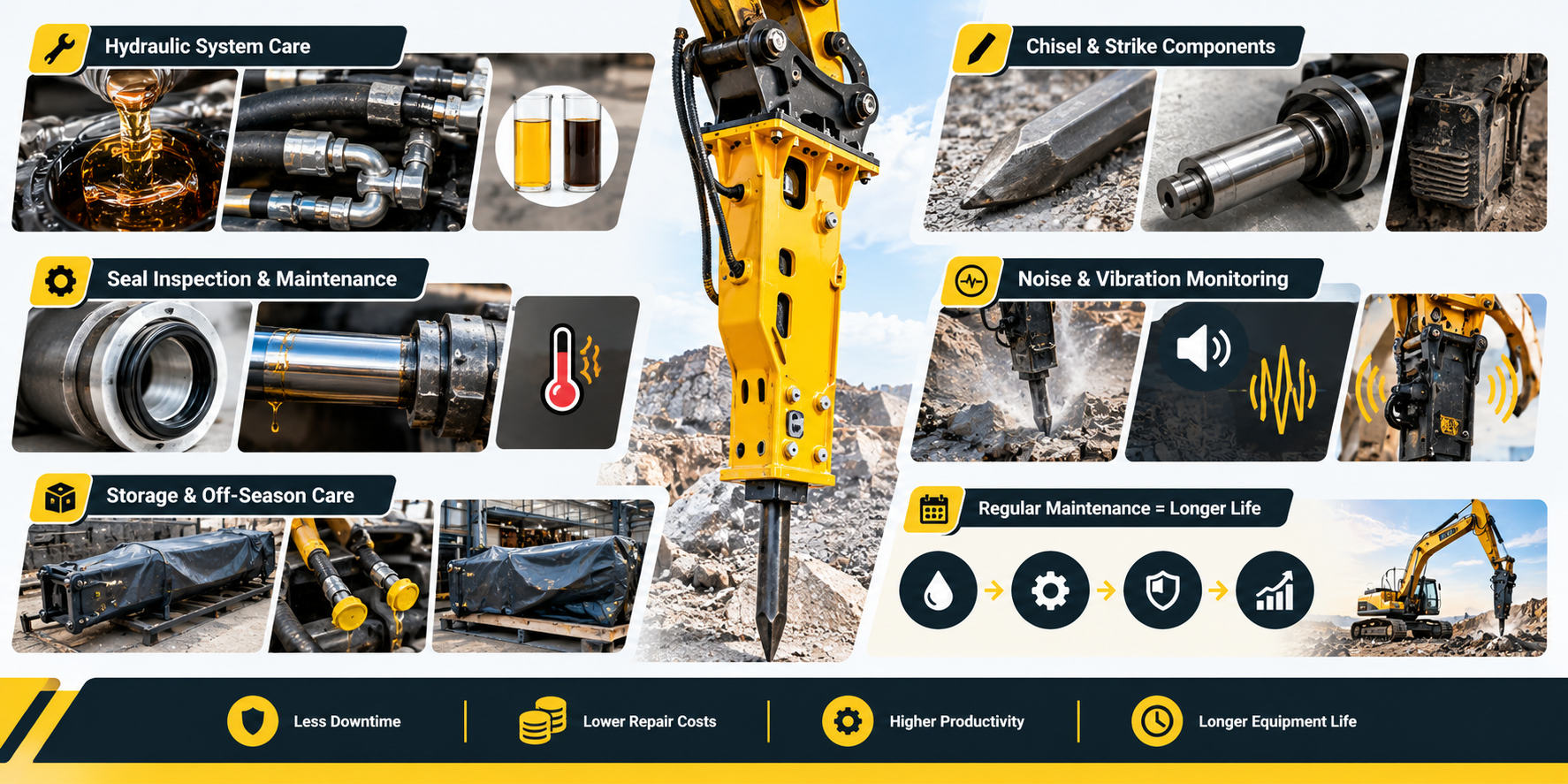
Hydraulic fluid is the lifeblood of your breaker. Dirty fluid causes everything to fail faster. Abrasive particles scratch pistons. Contaminated fluid reduces lubrication. The system overheats. One thing leads to another, and suddenly your breaker is dead.
Change the main hydraulic oil according to your equipment schedule. Most DOZCO breakers need oil changes at reasonable intervals. Don’t wait longer. Better to change it early than deal with a seized piston. The fluid itself isn’t expensive. The repairs are from using dirty fluid.
Check fluid color periodically. Good hydraulic oil looks clear or amber. If it’s dark and dirty, something’s wrong. “Milky-looking” means water got in there. Either way, drain it and fill it with fresh oil right away.
Keep the hydraulic lines clean. Dirt entering the system causes problems. When you’re replacing hoses or connections, work in a clean area. Cover openings with plugs. Don’t let dust fall into the hydraulic circuit. Five minutes of care prevent hours of repairs.
Chisel and Strike Components
Inspect the chisel regularly during breaker operation. Check it before starting work and during long jobs. Pay attention to signs such as a blunt tip, cracks, bending, or unusual wear.
You should also inspect the chisel if the breaker starts taking more hits to break the same material or the work feels slower than usual. Early inspection can help spot wear before it affects the breaker’s performance.
DOZCO offers different chisel types for different applications. Learn which ones work best for your material. Use the wrong chisel for your material, and you’re just wasting energy. You’ll wear stuff out faster than you need to.
Inspect the impact piston regularly. This is the component that actually strikes the chisel. Look for cracks or deformation. A damaged piston loses striking power. Replace it before it completely fails.
Keep dirt and debris off the strike area. Let dust pile up, and your breaker gets too hot.
Seal Inspection and Maintenance
Hydraulic seals prevent leaks. When seals fail, hydraulic oil leaks. The system loses pressure. Your breaker stops working. Early seal failure usually comes from contaminated hydraulic oil or excessive heat. Keep hydraulic fluid clean. Monitor temperature.
Look for weeping around the piston rod. A little seepage is normal sometimes. Steady dripping means the seal is failing. Don’t wait. Replace it soon. A new seal costs far less than a destroyed piston.
Temperature matters for seals. Excessive heat breaks them down faster. If your breaker runs hot during normal operation, something else is wrong. Low hydraulic oil levels, dirty filters, or heavy use without rest. Address the root cause.
Noise and Vibration Monitoring
Your breaker has a normal sound. You know what it is. When the sound changes, pay attention. Grinding noises mean internal component wear. Squealing indicates hydraulic oil pressure issues. Rattling suggests loose bolts. None of these are normal. Investigation is required.
Vibration tells you things too. Normal operation creates vibration, but your excavator handles it. Excessive vibration transmitted to the machine means something is loose. The dampening system isn’t working right. Or internal components are damaged. Get it checked.
Storage and Off-Season Care
When you’re not using the breaker for extended periods, prepare it for storage. This protects your investment during slow seasons.
Keep the attachment clean and dry. Cover it if storing outdoors. Keep it clean and dry. Takes ten minutes and stops rust from forming.
When you’re storing it for months, disconnect the hoses so fluid doesn’t leak everywhere. Cap them off so nothing gets inside. When you plug it back in, if the old adapters look sketchy, grab new ones. Bad connectors cause headaches the second you fire it up.
– Discharge the nitrogen gas with the back head, and then push the piston to avoid rust
the cylinder.
– Assemble the tool and store the hydraulic breaker indoors after applying the grease to
every part, especially the internal parts of the front head.
DOZCO’s Maintenance-Friendly Design
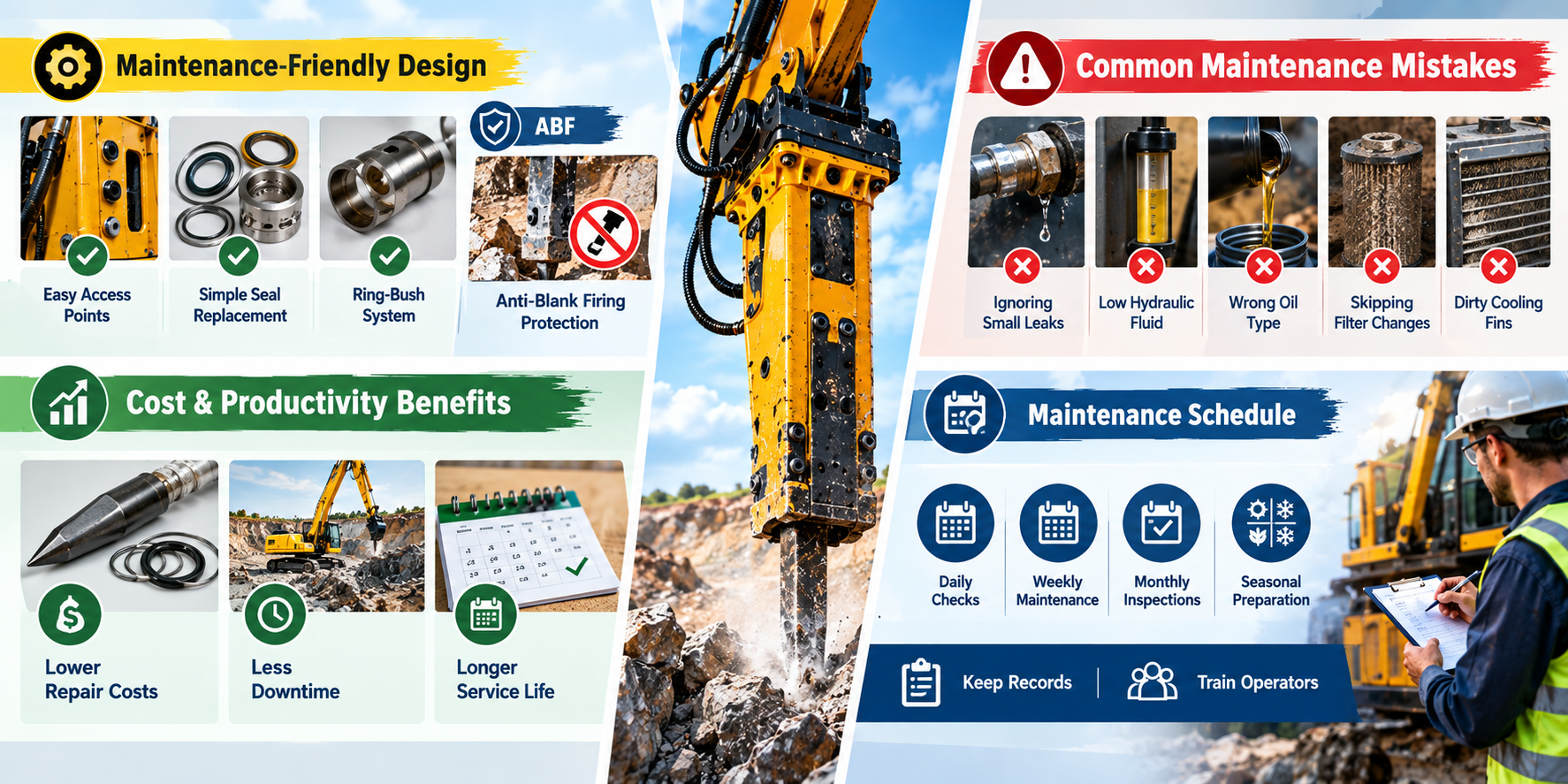
DOZCO engineers their breakers for easy maintenance. Access points are logical. Seals are simple to replace. The ring-bush combined-bush system reduces maintenance compared to older designs. But you still need to do the work.
The ISP (IDLE STROKE PREVENTION) system protects your breaker automatically. It prevents striking when not in contact with material. This reduces unnecessary wear. But it’s not an excuse to ignore maintenance
Common Maintenance Mistakes
Operators make predictable errors. Ignoring small leaks. “It’s just a little drip, no big deal.” Wrong. Small leaks become big ones. Address them immediately.
Running low on hydraulic fluid. You think it still works, just slower. Exactly. Slower work means the pump works harder. Everything overheats. Seals fail prematurely. Keep fluid topped off.
Using the wrong oil type. Your breaker needs hydraulic fluid meeting specific standards. Using motor oil or other substitutes destroys seals and pistons. Use the correct fluid. Always.
Skipping filter changes. Dirty filters don’t cost much to replace. Dirty fluid costs thousands in repairs. Change filters on schedule.
Cost and Productivity Benefits
Proper maintenance saves money. Period. A sealed piston costs less than replacing the entire breaker. Swap a worn chisel for fifty bucks. Ignore it, and your piston fails, which costs thousands. Stay on top of maintenance, or one small problem turns into a disaster.
Your equipment produces revenue when it works. Downtime costs money. Preventive maintenance keeps your breaker operational. You lose far less time on maintenance than on emergency repairs.
A well-maintained breaker lasts years. Neglected equipment fails in months. The difference is mostly simple regular checks and fluid changes. Easy work that pays for itself many times over.
Creating a Maintenance Schedule
Write down a schedule. Post it where operators see it. Daily checks. Weekly maintenance. Monthly inspections. Seasonal preparation. Make it routine.
Keep records of what you’ve done. When you replaced seals. When filters are changed. When you addressed problems. Records help you spot patterns. If seals fail every three months, something else is causing premature wear.
Train your operators on basic maintenance. They use the equipment daily. They notice problems first. Teaching them what to look for catches issues early.
Final Thoughts
Rock breaker maintenance tips boil down to paying attention. Watch your equipment. Listen to it. Feel the vibration. Check fluid levels. Change filters. Replace worn parts. This isn’t rocket science. It’s basic care for expensive equipment.
DOZCO builds breakers designed for easy maintenance. But design doesn’t matter if you ignore the work. The best-engineered breaker fails if you never maintain it. The average breaker operates for years if you keep up with maintenance.
Your breaker costs money. Keep it maintained, and it works. Skip maintenance, and you’ll replace it way sooner than you want. It’s that simple.
Author Details