







Tips to Extend Excavator Undercarriage Life in Extreme Conditions
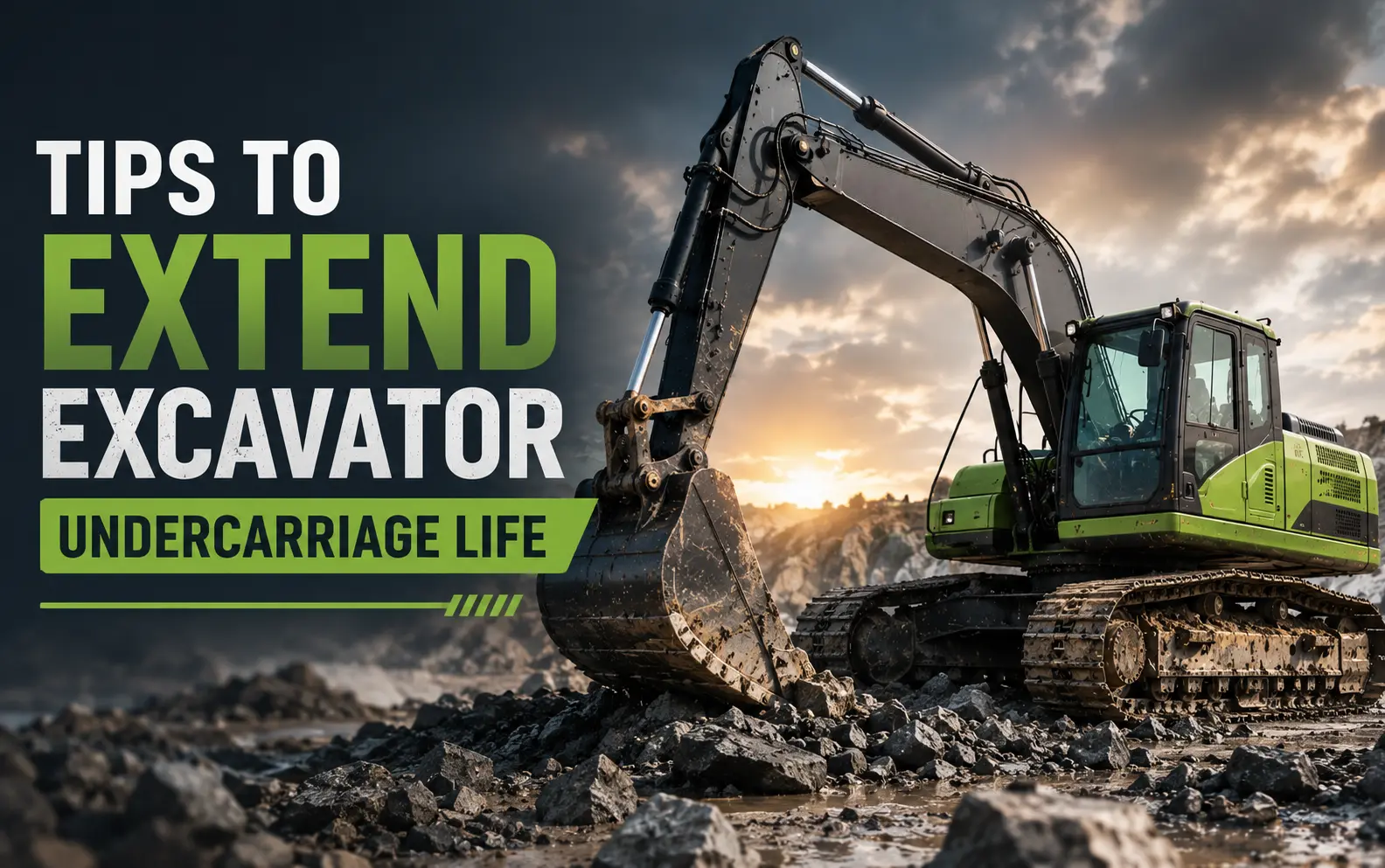
The undercarriage of an excavator is one of the main components of the machine. Its performance affects all other aspects of the excavator’s function and overall cost of ownership. Its job is to support the entire weight of the excavator and absorb the shock generated by the operation of the machine. Additionally, the undercarriage withstands the harshest kind of working conditions due to mining, quarrying, and rough terrain. For this reason, proper excavator undercarriage maintenance is important, as it will extend the life of the machine and help keep operating costs down.
Poor maintenance of your undercarriage will result in rapid wear-out. This will result in machine downtime, increased costs, and less productivity. In this blog, we will discuss how to properly maintain your excavator’s undercarriage. This will ensure that your undercarriage components last longer and provide you with consistent performance from your machine.
Why Undercarriage Maintenance is Important
The undercarriage consists of track links, assembly chains, rollers, idlers, track shoes, track guards, sprockets, and segments. Together, these components create a balance so that the movement of the excavator is stable.
When operating in extreme conditions, dirt, rocks, and debris often enter the track system. This increases wear on components and creates an unbalanced condition. Therefore, regular excavator undercarriage maintenance removes debris, decreases stress on the components, and extends their lifespan.
Furthermore, proper maintenance will enable your excavator to operate with greater fuel efficiency. A smooth-moving undercarriage uses less energy to operate the excavator.
Clean the Undercarriage Regularly
Keeping your excavator’s undercarriage clean is one of the easiest and most practical steps in excavator undercarriage maintenance.
The undercarriage is exposed to mud, stones, and debris. They accumulate between track components, leading to excessive wear from increased friction and causing damage from hardened mud in extremely cold weather conditions.
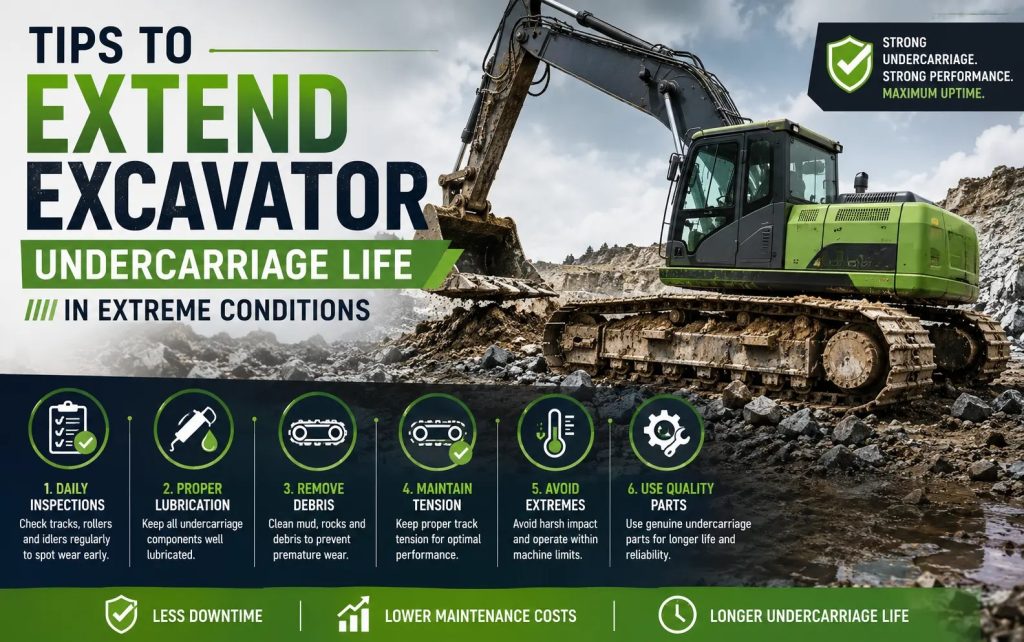
It is the operator’s responsibility to remove debris from the undercarriage at the end of each shift, particularly when working on “wet” or “muddy” jobs. By regularly removing debris, you can reduce the pressure on the track links and rollers.
Maintain Proper Track Tension
The correct amount of track tension for the track plays an important role in extending the life of the undercarriage. Equipment with improper tension will create uneven wear on the undercarriage components, and the excavator will not operate efficiently.
An excavator with loose tracks can slip while operating and damage undercarriage components. An excavator with too much tension (over-tension) will create extra stress on the rollers, idlers, and sprocket, again reducing the life of the undercarriage.
Regular component inspection is critical for excavator undercarriage maintenance. Regular inspections will help to identify potential wear or damage before they become a significant problem.
Inspect Components Frequently
Operators should routinely inspect the following components of the undercarriage:
- Track links for cracks or wear
- Rollers for smooth rotation
- Idlers for alignment
- Sprockets for tooth wear
- Track shoes for damage
By identifying any of the above-mentioned conditions on a timely basis, operators can avoid costly repairs or replacements and minimize further damage to the connected undercarriage components.
Operate the Machine Correctly
Operator behavior has a direct impact on undercarriage life. Poor operating habits can increase wear even with regular excavator undercarriage maintenance.
Avoid sudden turns and high-speed travel on rough surfaces. Sharp turns create stress on track components. Operating on slopes should be done carefully to maintain balance.
Whenever possible, operators should minimize unnecessary movement. Reducing travel distance helps decrease wear on the undercarriage.
Choose the Right Track Shoes
Track shoes play an important role in machine stability and traction. Selecting the correct type improves performance and reduces wear.
Wide shoes are suitable for soft ground but may increase stress in rocky conditions. Narrow shoes perform better on hard surfaces.
Choosing the right configuration is an important part of excavator undercarriage maintenance. It ensures better load distribution and longer service life.
Lubrication and Sealing
Proper application of lubricant to the track chain reduces friction. As a result, track chains give better performance in harsh conditions.
An important aspect of maintaining the excavator’s undercarriage is to examine the seals for signs of damage or lack of lubrication. To minimize future component wear, contaminants can enter through damaged seals.
Using the correct lubrication will maximize the efficiency of your excavator undercarriage while minimizing the chance of component failure.
Use High-Quality Undercarriage Parts
The longevity of the undercarriage parts will depend on their quality. Parts manufactured from premium alloys with correct heat treatment will offer greater resistance to wear than low-density alloys.
When operated under high loads, quality components provide higher performance compared to unreliable components. They are critical components of the mining and construction industries.
In addition to being essential for proper excavator undercarriage maintenance, quality components will help reduce overall costs for the life of the machine.
Read more on: Why DOZCO Undercarriage Parts Deliver Superior Performance
Monitor Wear Patterns
Uneven wear and tear can cause underlying issues, which may cause misalignment, incorrect tension, or improper operations. Regular monitoring of wear patterns is a critical part of excavator undercarriage maintenance for any operator. Operators should look for signs such as the following:
- Uneven track wear
- Excessive vibration
- Noise during movement
Identifying these issues at their earliest stages can help avoid major failures.
Adapt to Job Site Conditions
Different job sites will require different maintenance approaches. An operator should have the following knowledge when maintaining equipment in different locations:
- Regularly clean tracks at muddy sites
- Select stronger components on rocky terrain.
- Sandy environments require better sealing.
By adapting maintenance procedures to job conditions, the operator will enhance productivity and ensure that the excavator’s undercarriage maintenance procedures will work properly regardless of the location.
Train Operators and Maintenance Teams
Skilled operators and trained technicians are necessary to conduct excavator undercarriage maintenance. Proper training will ensure that individuals understand proper operation, inspection, clean-up, and ongoing maintenance procedures. Consequently, this will improve the overall success of the maintenance procedures being conducted on the excavator undercarriage.
Conclusion
Excavator undercarriage systems suffer extreme amounts of pressure and stress from difficult job-site conditions. Therefore, without proper care, the components will quickly wear out, leading to additional operating expenses.
To extend the lifespan of your undercarriage, conduct best practices such as routine cleaning and maintenance, maintain proper track tension, perform regular inspections of the undercarriage, and operate the excavator correctly. You should also utilize high-quality components in addition to adapting to job-site conditions.
Regular maintenance of your excavator’s undercarriage extends its lifespan by reducing downtime from failures and enhancing overall productivity.
FAQs
Why does the undercarriage wear out so fast on tough job sites?
Mud, rocks, and debris constantly get into the track system and create friction. Since the undercarriage carries the full weight of the machine and absorbs every shock, it wears out faster without regular cleaning and maintenance.
How often should I clean my excavator undercarriage?
Clean it at the end of every shift, especially on muddy or wet job sites. Hardened mud builds up between track parts and damages components faster than regular wear does.
What happens if my track tension is wrong?
Loose tracks cause the machine to slip and damage parts. Tight tracks put extra stress on rollers, idlers, and sprockets. Correct track tension is one of the easiest ways to protect your undercarriage.
How do I know something is going wrong with my undercarriage?
Watch for uneven track wear, unusual vibrations, and strange noises during movement. Catching these signs early saves you from expensive repairs later.
Do better-quality undercarriage parts actually make a difference?
Yes. High-quality parts made from premium alloys resist wear much better, last longer under heavy loads, and reduce your total maintenance costs over the life of the machine.
Author Details