







Challenges in Maintaining Earth Auger Attachment: A Guide for Indian Businesses
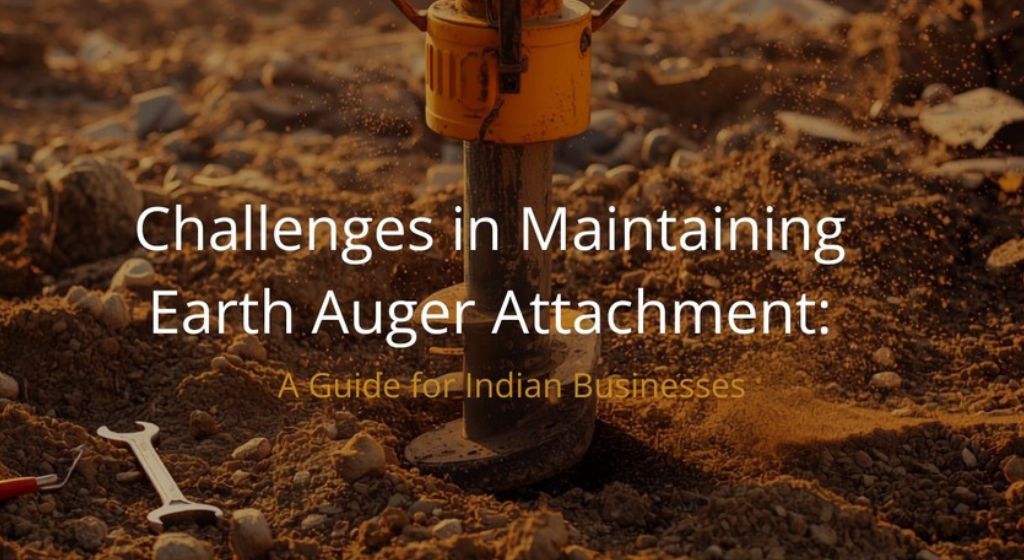
Earth augers are a preferred attachment in worksites. They are versatile and can be used for different types of projects, such as fencing, landscaping, tree planting, foundation piles, and so on. You can attach it to various machines as well, including excavators, backhoe loaders, and mini excavators. However, maintaining an earth auger attachment can be difficult in a rough environment. Even within a single worksite, the topography may shift from soft topsoil to compacted clay, from wet black cotton soil to hard laterite, or from loose reclaimed fill to fractured rock. This is one of the major reasons why even experienced operators and contractors have a difficult time planning maintenance.
In this article, we will explore how businesses can increase the life span of their earth auger attachments while dealing with the challenges:
Challenges in Maintaining Earth Auger Attachments
Let’s take a look at what businesses and operators should be aware of when using an earth auger drill attachment in India:
- In abrasive laterite, gravel, or reclaimed land, teeth wear out faster and break more often.
- During drilling, loose teeth may fall off. This creates an imbalance, causes vibration, and pushes extra stress onto the drive head.
- If the auger strikes hidden stones, old concrete, or mixed debris, the flights can bend, and the tube can get damaged.
- Soil conditions shift from site to site, so torque loads can jump suddenly. These spikes make auger parts age faster.
- Long working hours without breaks heat up the hydraulic motor and slow down its performance.
- Any drilling misalignment puts sideways pressure on shafts, bearings, and flights.
- Sticky soils, especially black cotton soil, clog the flights, increase resistance, and strain the motor.
- In coastal zones, humid regions, or dusty industrial areas, corrosion grows quickly. Dust intrusion also affects how smoothly the auger runs.
- Novice operators, and sometimes even trained ones, often select the wrong teeth. This causes quick wear and poor cutting efficiency.
- Using an unsuitable carrier leads to unstable RPM, sudden torque drops, and faster seal wear inside the gearbox.
- Tough site conditions and tight deadlines often leave no room for routine cleaning or lubrication, which later turns into a serious maintenance problem.
- Overloading the attachment, using excessive downforce, or ignoring torque spikes puts the entire system at risk.
Why Material and Design Play a Crucial Role in Reducing Maintenance Needs
The Importance of Heavy-Duty Steel Tubes
Since the earth auger attachment is widely used in harsh environments, it is always a good decision to choose heavy-duty, high-grade steel tubes built to withstand demanding drilling conditions. DOZCO earth auger attachments feature thick-walled, heavy-duty steel tubes specifically engineered for Indian soil conditions and challenging worksites. When tubes are fabricated from thin or low-quality steel, they deform under repeated torque cycles or after collisions with buried stones. DOZCO’s heavy-duty construction maintains structural stability across different terrains. Therefore, operators don’t need to worry about bending or cracking, lowering the frequency of repair work significantly.
How Shallow-Pitch Flighting Improves Reliability
Flight design influences maintenance more than many operators realise. A shallow-pitch flight is designed with tighter and less steep spirals. DOZCO designs shallow-pitch flights with this advanced geometry that has an impact on how smoothly an auger drills and unloads soil. When the pitch is shallow, the spoil stays attached to the flights more securely every time you withdraw the auger, instead of slipping off or dropping suddenly. Hence, the auger attachment doesn’t experience the following:
- Sudden changes in load, when the soil slips off.
- Jerky rotational movement that strains the gearbox.
- Vibration spikes that damage bearings and shafts.
- Extra downforce requirements, which can overheat the motor.
DOZCO’s shallow-pitch design keeps the drilling process smooth and reduces unnecessary stress on all components.
The Role of Tooth Variations in Managing Wear
The auger tooth cuts through the surface. Choosing the right tooth can reduce vibration and prevent structural stress on the drive shaft and gearbox. Usually, operators choose between Earth, Tungsten and Rock variations based on soil types. Using a soft-soil tooth in abrasive laterite will shorten the tooth life drastically, while using a rock tooth in loose soil creates unnecessary drag.
DOZCO earth augers come equipped with different tooth variations optimized for Indian soil conditions. That is why DOZCO earth augers include a Shock Lock™ system that further stabilizes performance by securing each tooth firmly in place. This prevents tooth loss, which is one of the major reasons behind imbalance and accelerated wear. DOZCO’s tooth selection system ensures operators pick the right configuration for their specific ground conditions.
Monitoring Tools as Preventive Maintenance Solutions
In most cases, all it takes is frequent inspection to avoid costly maintenance. Here’s what to monitor:
Using Alignment Monitoring to Prevent Structural Strain
When using an earth auger, the attachment should be aligned properly. Because if the auger attachment begins drilling at an angle, side load builds on the flights, shaft, and bearings. This causes premature wear, and the attachment might bend as well.
To avoid this, operators can install an alignment monitor for real-time visual guidance inside the operator’s cab. This is a straightforward way to make sure the attachment is drilling vertically and reducing unnecessary structural strain.
How Torque Monitoring Reduces Component Stress
Torque monitoring plays an equally important preventive role. When drilling through a hard surface, auger attachments need more force to turn. If the operator keeps pushing down without real-time feedback, the auger can get overloaded. This extra load can break the pilot bit, bend the flights, damage bearings or even harm the gearbox.
A torque monitor shows the operator exactly how much strain the auger is under. If the numbers go too high, the operator knows when to stop, back out, or reduce pressure. This prevents damage to the drive head and keeps the attachment running safely for a longer time.
Wrap Up
When working in a demanding environment, operators need earth auger attachments that can endure abrasion, shock, heat, moisture and high-duty cycles. However, you have to accept the fact that maintenance and replacement will always be part of the workflow. But choosing a well-engineered auger system significantly reduces both frequency and severity of repairs. At DOZCO, our earth augers connect easily with most OEM excavators, skid steers and backhoe loaders, making deployment simple on any site.
FAQs
Q.1. What causes an earth auger to stop working?
An auger usually stops working when it faces excessive torque, tooth loss, or flight distortion caused by stones, debris, or mixed soil layers. Overheating of the hydraulic motor, misalignment during drilling, clogged sticky soil, or worn bearings can also halt operation. If you choose the wrong teeth or an incompatible carrier, it often worsens the issue and interrupts performance.
Q.2. How do you maintain an auger bit?
Maintain an auger bit by checking tooth condition, ensuring alignment, clearing soil buildup, and monitoring torque during drilling. Clean the attachment after every shift, lubricate moving parts, and inspect flights, shafts, and bearings for stress or bending. Using the right teeth, depending on the ground and avoiding overload keeps the bit in good shape for longer.
Q.3. Are there disadvantages to auger boring?
Auger boring struggles when soil conditions shift sharply from soft topsoil to abrasive laterite or rock. Teeth wear faster, flights may distort, and torque spikes become unpredictable. Sticky soils clog the auger, coastal humidity accelerates corrosion, and buried debris causes impact damage. These conditions demand frequent checks, skilled operation, and stronger maintenance routines.
Q.4. Why is my earth auger not digging well?
Your earth auger may not dig well if the teeth are worn, missing, or wrongly chosen for the soil. Misalignment creates side-loading that slows penetration, while clogged black cotton soil raises resistance. Excessive torque, a weak carrier, or an overheating hydraulic motor can also stall drilling. Inspect teeth, alignment, and torque before continuing.
Author Details