







Common Mistakes Operators Make While Using Rock Breaker Excavator Attachments
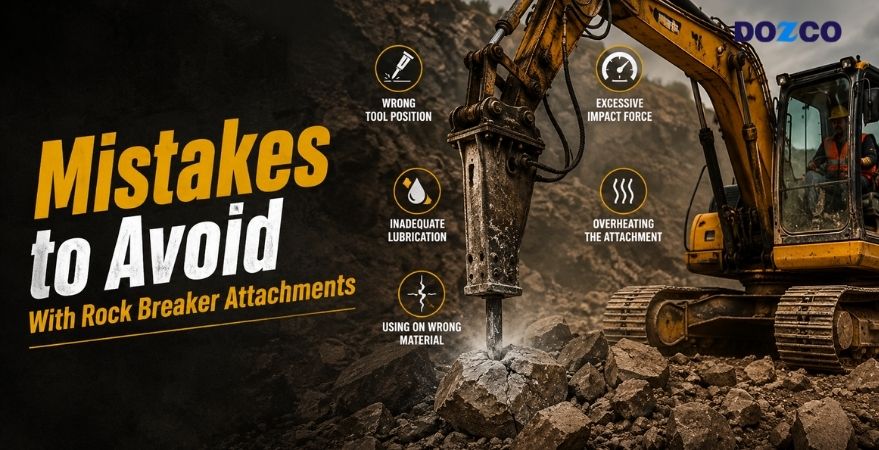
Operators make consistent errors when using rock breaker equipment. These mistakes damage attachments, reduce productivity, and cost money. Understanding what goes wrong helps contractors avoid expensive repairs. Rock breaker technology delivers excellent results when used correctly. Misuse creates problems that could be prevented.
Ignoring Maintenance Schedules
Rock breakers require regular maintenance to function properly. Many operators skip basic checks between jobs. Hydraulic fluid levels need to be verified before starting work. Low fluid pressure reduces striking force significantly, and the breaker struggles to penetrate material effectively. Continuing work with low pressure damages seals and pistons.
Filter changes matter more than operators realize. Dirty filters restrict hydraulic flow, so the system works harder than necessary. Heat builds up inside the breaker and seals degrade faster. Replacing filters weekly during heavy use prevents cascading failures. It’s the simplest maintenance task with the biggest impact.
Anti-Blank Firing systems protect equipment automatically. Some operators disable this safety feature because they believe it limits productivity. Actually, the opposite is true. Blank firing wastes energy and damages the mounting points. The breaker strikes when not hitting material, which destroys internal components needlessly.
Using Wrong Chisel Types
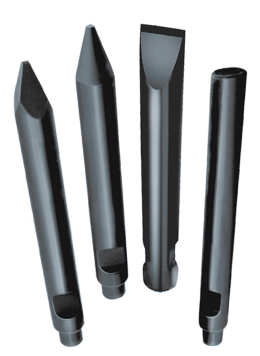
DOZCO rock breaker models accept different chisel types. Many operators grab whatever chisel is available instead of selecting the right one.
- Blunt chisels work for general breaking
- Moil Points concentrate force precisely
- Wedge chisels serve specialized applications
- Conical chisels handle specific conditions
Using soft-soil chisels on granite is counterproductive. The teeth wear instantly, the excavator rock breaker works inefficiently, fuel consumption increases, and the job takes longer. Matching chisel type to material ensures proper performance and extends equipment life significantly. Wrong chisels create unnecessary vibration and stress.
Operating Beyond Rated Capacity
Every DOZCO rock breaker model has specifications for good reasons. Operators sometimes exceed these limits.
- The D40 breaker handles excavators up to 2.5 tons
- The D155 reaches 36 ton machines
- The 5000A serves 45 to 60 ton excavators
Small breakers on large excavators fail quickly. The hydraulic system delivers more flow than the breaker handles, so seals blow and pistons crack. Operating large breakers on small excavators means insufficient power delivery. The breaker doesn’t strike effectively, and performance suffers immediately.
Matching breaker size to excavator capacity extends equipment life. Undersizing wastes hydraulic potential. Oversizing creates structural damage. Proper matching delivers optimal results.
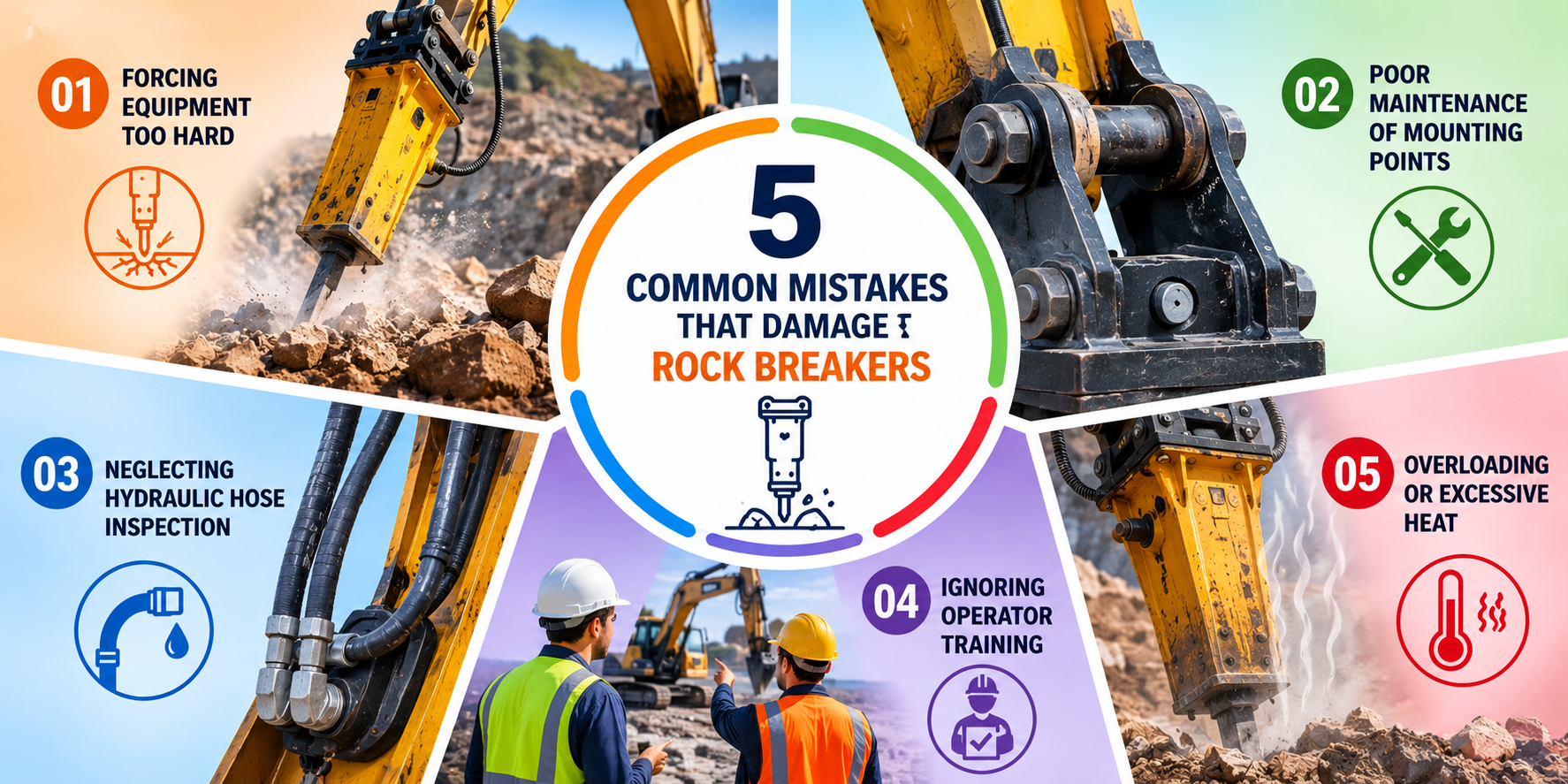
Forcing Equipment Too Hard
Excessive downforce breaks expensive components. Operators push hard, trying to speed up work. The material resists, they push harder, the piston rod bends, and the gearbox strains. Internal parts deteriorate rapidly.
Smart operators feel the breaker’s response. When resistance increases, they adjust their approach. They reduce pressure and allow the hydraulic rock breaker to work at a natural pace. Patience preserves equipment and saves money long term.
Poor Maintenance of Mounting Points
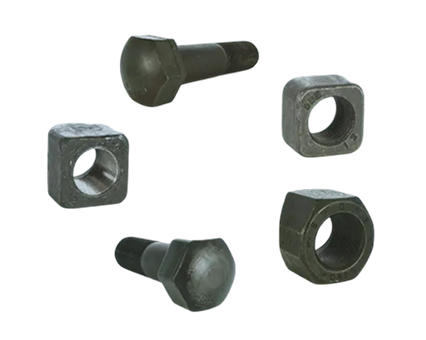
Rock breaker attachments need secure mounting. Loose bolts vibrate free during operation. The breaker becomes unstable, and catastrophic failure can happen suddenly. The attachment can detach from the excavator, creating safety hazards and equipment damage.
Checking bolts before each shift takes minutes. Tightening loose fasteners prevents disaster. After heavy breaking work, bolts always need verification, since vibration continuously loosens hardware. Regular checks catch problems early.
Neglecting Hydraulic Hose Inspection
Cracked or leaking hoses cause system failure. Operators sometimes ignore small drips, thinking it’s just a little leak. Small leaks become big ones. Hydraulic fluid pressure drops, and the excavator rock breaker performs poorly. Complete hose failure stops work entirely.
Inspecting hoses weekly identifies problems early. Replacing worn hoses prevents expensive repairs. The hoses cost far less than replacing damaged pistons or pumps.
Ignoring Operator Training
Untrained operators make constant mistakes. They don’t recognize normal operation sounds and miss warning signs before failure occurs. Proper training prevents most equipment failures.
New operators should work alongside experienced ones. They learn what normal sounds mean, understand how much force is appropriate, and recognize when something’s wrong. Training investment saves money through reduced damage.
Overloading or Excessive Heat
Running the breaker continuously without rest causes overheating. The hydraulic fluid temperature rises, seals degrade, performance drops, and the motor struggles. Long work shifts without breaks damage equipment.
Operators should monitor fluid temperature. When it gets too hot, they stop and let the breaker cool. Taking brief breaks throughout the day preserves equipment life. Pushing through heat exhaustion leads to expensive repairs.
DOZCO Rock Breaker Excellence
DOZCO manufactures rock breakers from D40 through the professional grade 5000A model. Each model features Anti-Blank Firing technology, preventing unnecessary striking. Advanced dampening systems reduce vibration. Ring Bush combined bush systems have lower maintenance costs. All models receive ISO and CE certification, ensuring quality.
The 5000A rock breaker represents the pinnacle of heavy duty technology.
- Weighs 4269 kg, serving 45 to 60 ton excavators
- The 175 mm tool diameter concentrates enormous force on material surfaces
- Operating pressure reaches 150 to 190 bar
- Impact rate delivers 200 to 350 BPM, with each strike providing massive breaking force
Conclusion
Common mistakes operators make are preventable. Most issues stem from skipping maintenance or ignoring equipment limits. Proper training eliminates most errors. Regular maintenance catches problems early. Respecting equipment specifications preserves investment. DOZCO rock breaker equipment is built to last. Proper operation ensures long service life and reliable performance.
FAQs:
What causes a rock breaker to stop working?
Several things can kill a rock breaker. Fluid levels dropping too low is common. Seals blow out. The piston cracks from overuse. Sometimes operators just push too hard on hard rock and snap expensive parts. Mounting bolts loosen, and the whole thing becomes unstable. Using the wrong chisel or a mismatched excavator causes problems too. Usually it’s a combination of things.
How often should I maintain my rock breaker?
• Check the hydraulic fluid before you start every morning
• Change filters every seven days or so during heavy work weeks
• Tighten mounting bolts after breaking sessions, since they vibrate loose constantly
• Run weekly seal checks and replace anything that looks worn instead of waiting for it to fail
Can I use any chisel on my excavator rock breaker?
No, definitely not. Granite needs one type, soft ground needs another, and concrete has its own chisel. Just grabbing whatever sits nearby is how people waste money. Wrong chisels bounce around, create vibration, and wear out instantly. Spend time choosing the right one for your material, and the breaker performs way better.
What’s the difference between a rock breaker and a hydraulic hammer?
There’s no real difference at all. Contractors call it a rock breaker on one job and a hydraulic hammer on the next. Some call it a percussion breaker. It’s the same equipment doing the same work. Regional differences mean the terminology changes. Australia uses different names than India, and different companies use different words. The tool does the same job no matter what someone calls it.
How do I know if my excavator rock breaker needs repair?
You’ll hear it first. Sounds change when something’s wrong. Weak strikes mean issues. Leaking fluid is obvious. Vibration gets worse. The breaker gets hot faster than normal. Any of these things means stop working and get it checked. Pushing through problems turns small fixes into huge repairs.
Why does my rock breaker lose power in hard material?
Most likely, the chisels are worn down and just don’t bite into material anymore. Low pressure in the hydraulic system also kills power. Could be seal problems reducing pressure. Maybe you’re using it on rock that’s too hard for that size breaker. Check the chisel condition first, replace them, and see if that fixes it. If not, get the hydraulics checked.
Author Details