







From Pipelines to Precision: Why Mini Excavators Are Essential for Utility Work
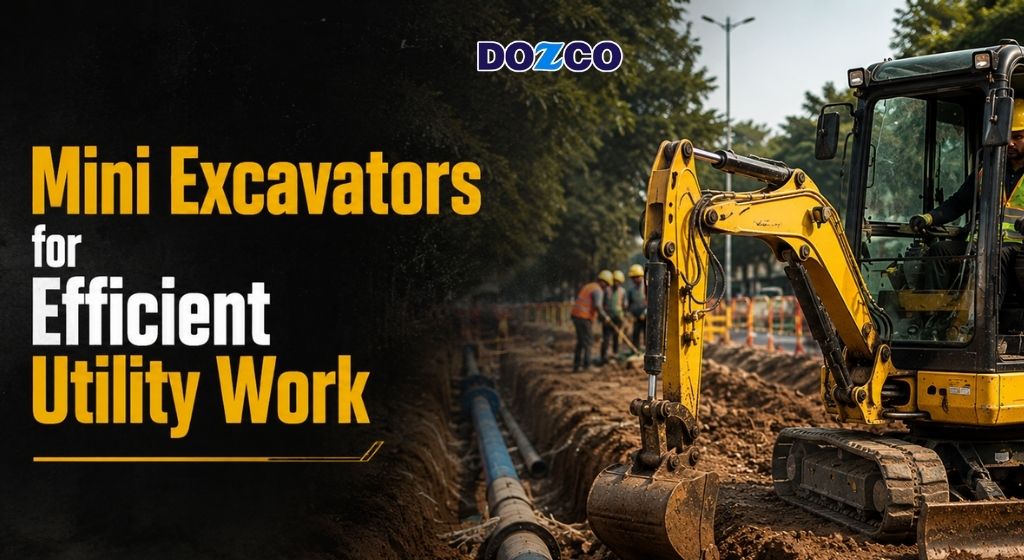
The city’s entire underground network depends on precise installation. Water mains fail when trenches miss depth specifications. Gas lines rupture when contractors hit existing utilities. Electrical cables corrode when water pools in poorly graded trenches. One installation mistake affects thousands of people. Yet most urban work areas can’t accommodate standard excavators. That’s where mini excavators become indispensable.
The Challenge of Underground Utility Installation
Working in underground workspaces is difficult due to the congestion of utilities being present. Water lines are generally between 1.2 and 2.4 meters below the ground’s surface. The sewer lines are established even deeper, at approximately 1.5 m to 3.0 m. The use of electrical conduits is installed between 0.75 m and 1.2 m depths, and telecommunication ductwork is generally established at a range of 0.6 to 1.2 m. The gas lines are also between 0.75 m and 0.9 m. Each utility must be installed with a minimum separation distance from other utilities of at least 300 m to 600 m in accordance with engineering standards.
Large excavators cannot operate in limited spaces. They require wide work zones. They demand expensive staging areas. Due to these limitations, projects slow down, and costs multiply.
Meet the Solution: Mini Excavators
The compact excavator category of equipment was developed in the 1970s by engineering firms that recognized that there were no compact excavators in the marketplace that met the needs of engineers. They required an excavator that could work in confined spaces and yet be powerful. Engineers refined the concept over the years until they began to perfect what we know today as a compact excavator. By the 1990s, innovations like zero tail swing technology transformed the compact excavator.
Today, there are different brands of compact excavators with operating weights that range from 2 tons to 5 tons. Therefore, some specific models are most appropriate for specific project requirements. A 2-ton compact excavator would work perfectly for residential areas and for the installation of small utilities in trenching. A 3-ton compact excavator is best suited for high power requirements. Finally, a 5-ton compact excavator would be able to perform medium to heavy excavating in confined spaces while maintaining access to the area of work.
This variety means contractors select equipment matched exactly to their needs. The machines deliver power without excess size. They operate efficiently without wasting resources on unnecessary capacity. Modern engineering focuses on fuel efficiency, precise hydraulic controls, and durability in demanding conditions.
DOZCO has distributed Yanmar mini excavators across India since 2007, supplying over 2,000 units that continue performing reliably across construction sites and utility projects. This market presence demonstrates the viability and value of compact equipment for Indian job site conditions.
Why Zero Tail Swing Matters for Utilities
Most excavators swing their rear end during rotation. This rear swing creates dangerous arcs that damage surrounding infrastructure. Underground utility work happens in confined spaces where any swing destroys existing pipes, cables, or structures.
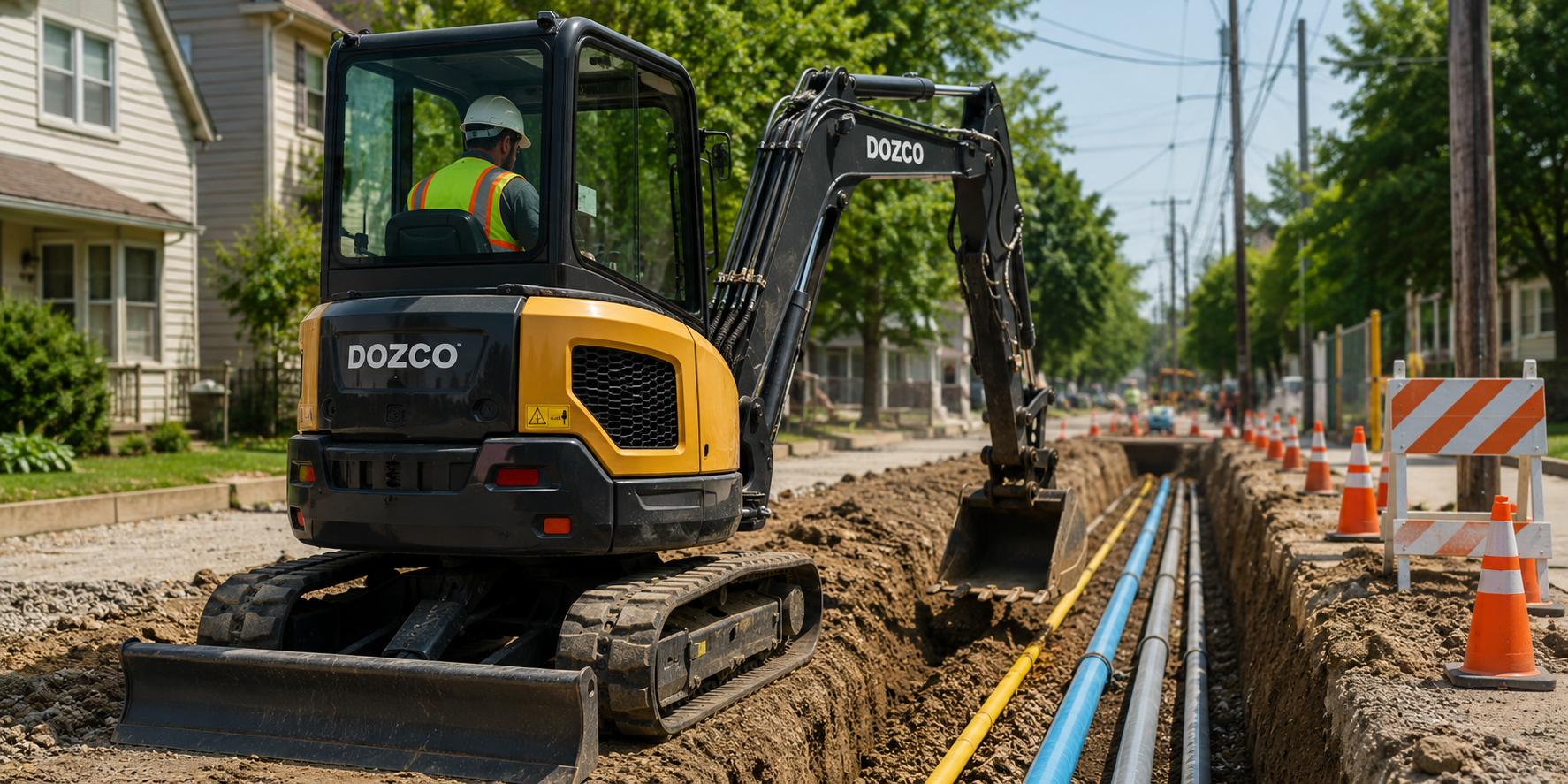
Zero Tail Swing technology keeps the excavator’s rear within its track width. The upper body rotates while the tracks stay stationary. You can work next to buildings, beneath power lines, or alongside underground utilities without fear of collision.
For utility contractors, this feature eliminates the need for extensive site clearing. Work zones shrink dramatically. Multiple utilities can be handled from the same trench location. Time on-site decreases; hence, project costs drop.
Precision That Prevents Failures
Water main trenches require a depth tolerance of 50-75 mm. Missing these specifications causes winter freezing that ruptures pipes and disrupts service. Gas line trenches need a consistent depth between 750 and 900 mm. Sewer installations require a grade control between 0.3% and 0.5% slope to maintain proper flow velocity.
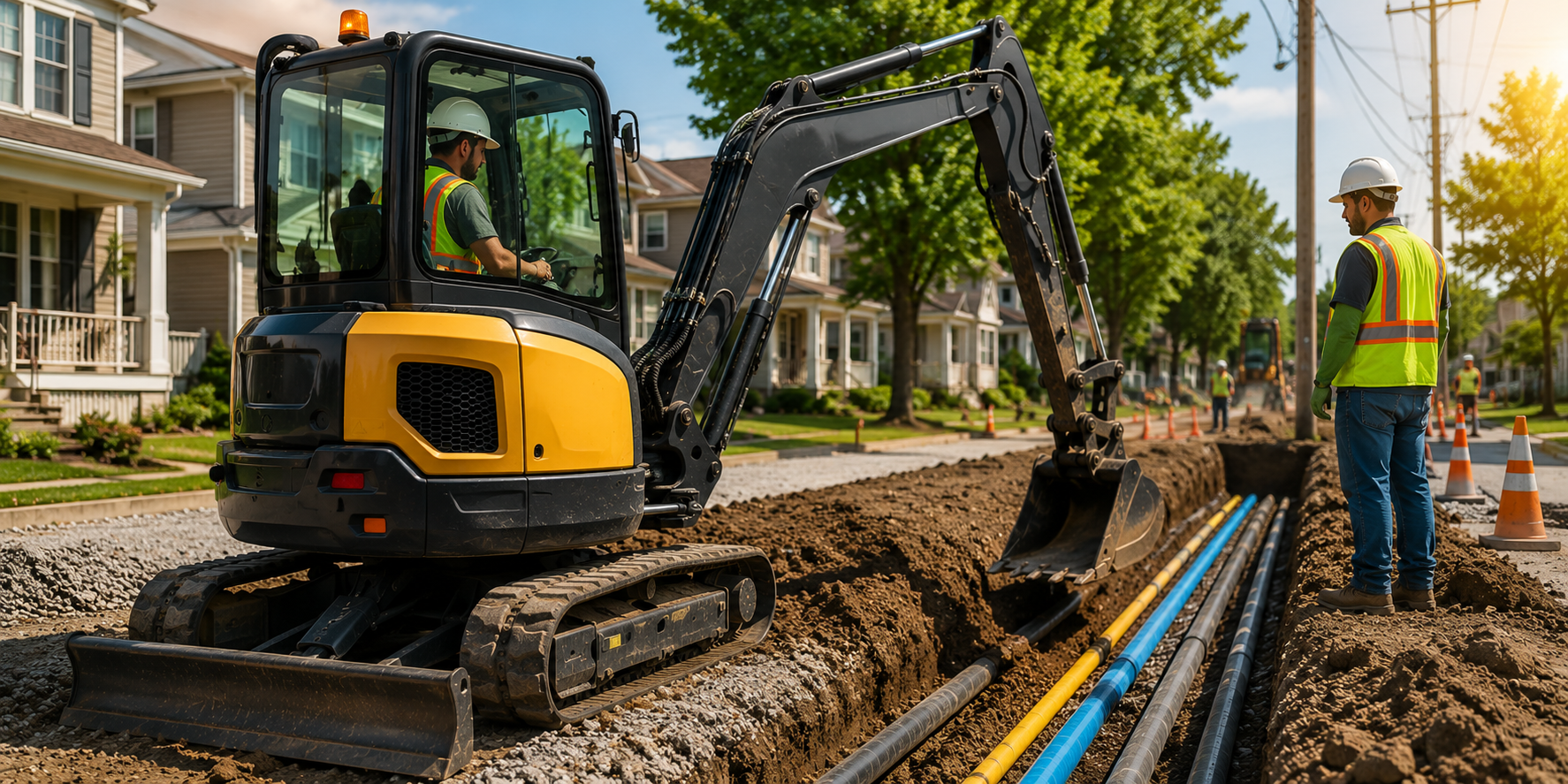
Mini excavator operators maintain these tolerances consistently using hydraulic controls and visual feedback. The bucket angle adjusts continuously as the machine moves forward. Depth stays within specification. Grade remains accurate.
This precision prevents the installation failures that haunt utility systems for years. Contractors working with proper equipment deliver reliable infrastructure from day one.
Fuel Efficiency That Protects Your Budget
Mini excavators consume 2 to 3 liters per hour, depending on conditions. Standard equipment burns 5 to 8 liters per hour for comparable work. On multi-week projects, fuel savings become massive.
The advanced hydraulic system and performance-fuel balance technology present in modern-day excavators deliver this efficiently. Less fuel burned means lower operating costs. Reduced crew requirements mean lower labor costs. Eliminating site preparation costs saves thousands more.
Utility companies calculate total project cost, including equipment rental, fuel consumption, operator wages, and site preparation. Mini excavators consistently deliver the lowest total cost for urban utility work.
Real-World Applications of Mini Excavators
- Water Distribution: When installing water mains through residential areas, access is very tight, and precision is critical. A mini excavator can fit down narrow streets, properly maintain depth specifications, and avoid damaging any existing utilities parallel to the new lines.
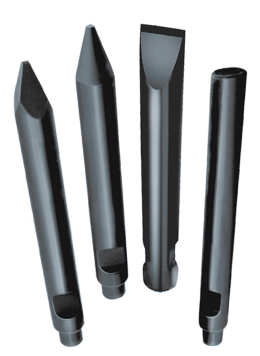
- Gas Pipeline Installation: Safety is a primary concern for gas companies. Mini excavators allow operators to have direct control over their machines and receive vibration feedback from them. A hydraulic breaker attachment allows operators to break apart rock without causing violent vibrations that can disrupt pipes in the area. The vibration experienced by the operator helps prevent accidents.
- Telecommunications: Fiber optic networks are installed in protective conduits that are located at depths of 300mm to 450mm below the surface. Mini excavators can be used to create conduits in a trench while maintaining the required constant depth and within a tolerance of 100mm of the centerline. Directional boring attachments can be used with mini excavators to install conduits under roadways without disturbing the road surface.
- Electrical Distribution: Pole installation requires holes at precise depths between 2.0 and 2.4 meters. DOZCO auger attachments drill with remarkable consistency. Properly drilled holes support poles in correct vertical alignment for decades of reliable service.
- Sewer Systems: Combined sewer systems require a grade control between a 0.3% and 0.5% slope. Operators use string lines and laser levels as references while the mini excavator maintains trench bottom tolerance within 25 mm of the designed profile. This precision prevents future flooding failures.
Training and Support Matter
DOZCO supports operator training covering machine controls, depth maintenance techniques, and safe working practices around existing utilities. Trained operators deliver accurate work meeting utility specifications while minimizing material waste.
Service intervals vary by model. On the ViO20 and ViO25, engine oil and filters are changed at 250 hours, all other filters are changed at 500 hours, and hydraulic oil is changed at 1000 hours. On the ViO30, ViO35, and ViO50, all filters and engine oil are changed at 500 hours, and hydraulic oil is changed at 1000 hours. Most contractors handle routine maintenance themselves with basic tools.
Parts availability through DOZCO ensures you’re never waiting weeks for essential components. They maintain distribution centers where contractors actually work, not just in major cities.
The Bottom Line
Utility infrastructure reliability depends on proper installation. Underground utilities must be installed at precise depths, correct grades, and proper spacing. Standard equipment cannot operate in the confined spaces where this work happens.
Yanmar mini excavators solve this problem. Zero Tail Swing technology works in tight spaces. Advanced hydraulic systems maintain precision that prevents failures. Efficient fuel consumption controls costs. Over two decades of DOZCO support in India means local expertise and rapid response.
For utility contractors committed to quality work, Yanmar mini excavators from DOZCO represent the standard equipment choice. The machines deliver precision, mobility, and cost efficiency that utility infrastructure demands. When the work involves water mains, gas lines, telecommunications networks, or electrical distribution, mini excavators aren’t optional, they’re essential.
Author Details