







How to Choose the Right Earth Auger for Different Ground Conditions
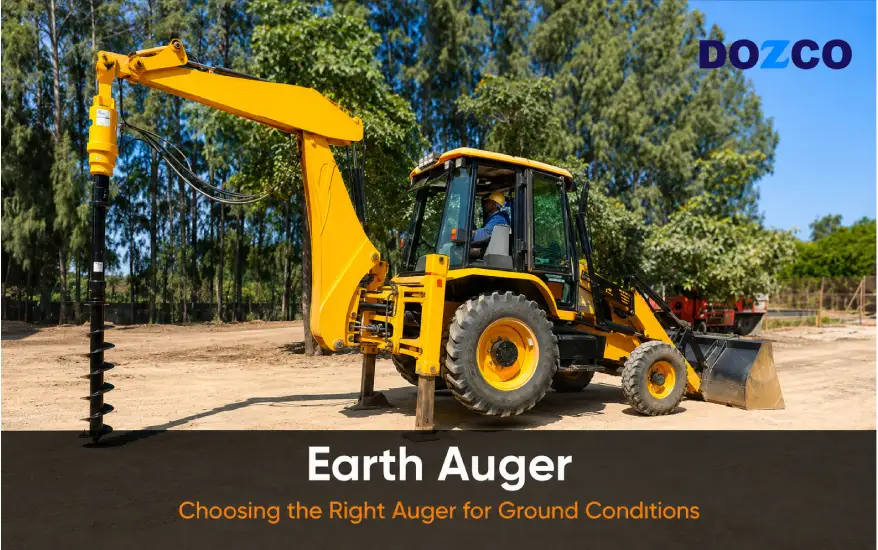
Auger attachments make it easier for operators to dig a hole in the earth. These attachments are mounted on a heavy-duty machine and spin to cut a clean hole. However, when using this excavator attachment on-site, operators often face different challenges.
For instance, the ground changes in a few metres. Moisture can influence how soil behaves, and the wrong bit setup can make a small job feel like trenching through bedrock. That’s why auger selection, especially matching tooling to soil, is essential as it affects speed, wear, bore quality, and ultimately project margin.
At DOZCO, we help operators and fleet owners choose the right earth auger attachment. In this article, we will discuss the primary factors to keep in mind when selecting an auger attachment:
Understanding Ground Behaviours
Most drilling contractors classify soil based on how it behaves under a spinning auger, not on its mineral composition. Here are a few common categories:
- Soft soils (clay, loam, sandy fill): In this type of surface, the auger spins faster and feels easy at the beginning. The challenge is to keep the hole straight. Soft or wet material can smear, slide, or fall back inside, so the pilot needs to guide the auger firmly or the bore may lose shape.
- Mixed or compact soils: These surfaces can be unpredictable because the material changes as you drill. One second, the teeth bite in nicely, and the next second, they hit gravel or a compacted layer and slide over it. This causes the auger to shake or chatter unless the operator slows down and controls the feed.
- Layered ground changes from soft to hard as you drill, almost like two different materials stacked on top of each other. Hence, the operator has to slow down, steady the feed, and keep the auger straight to avoid stalling or damaging the teeth.
The Role of Earth Auger Components When the Ground Pushes Back
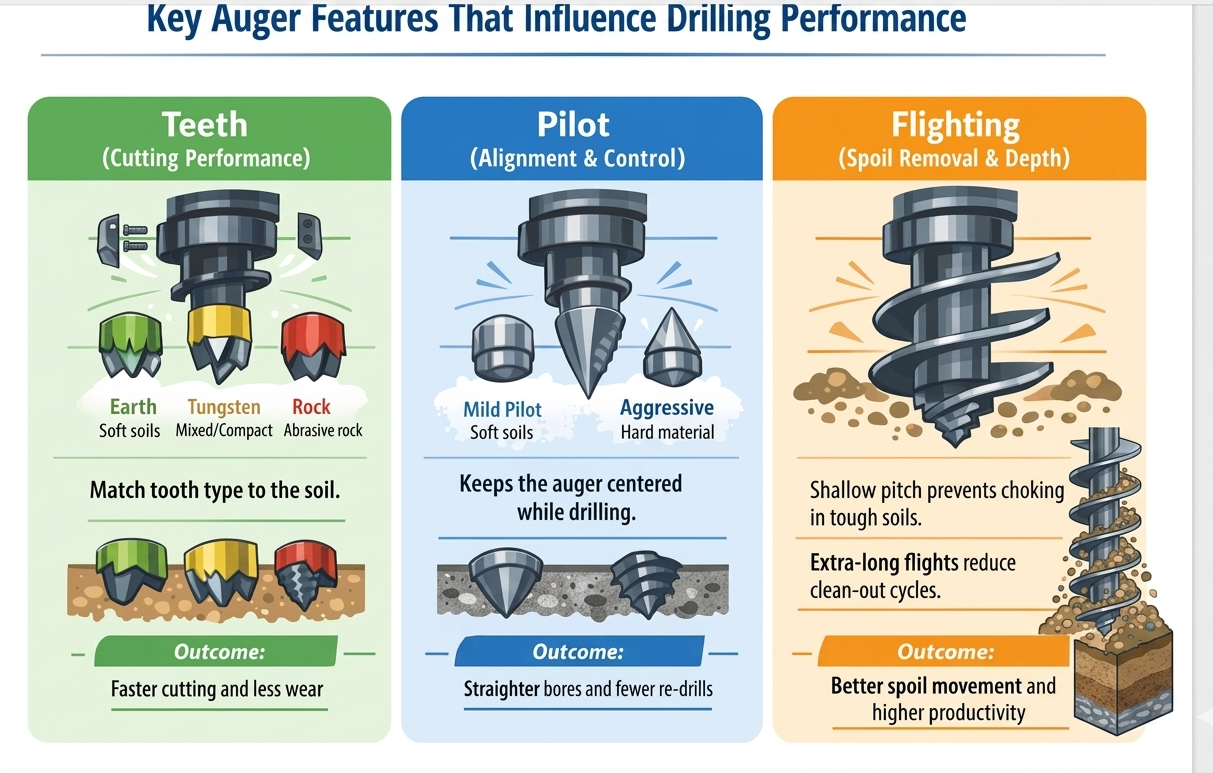
Choosing an auger isn’t just picking a diameter. Several features influence how the bit performs underground:
1. Tooth Geometry:
Earth teeth cut through soft soils quickly and leave a clean bore. Tungsten carbide teeth perform better in mixed or compacted material because they grind through harder pockets instead of slipping.
2. Pilot Design:
The pilot guides the auger into the ground and keeps it centred as it drills. When the soil is firm or rocky, a steeper pilot offers better control and prevents wandering. For softer soils, a milder pilot is enough to hold alignment.
3. Flight Pitch and Flight Length:
Flighting controls both spoil removal and overall cutting efficiency. Shallow pitch flights help keep the spoil riding the flights instead of packing around the bit.
This prevents choking in compact or sticky ground and reduces the need for frequent clean-out cycles. Longer flights also make a noticeable difference in productivity during deep holes because the operator spends less time withdrawing the auger to clear spoil.
4. Shock Lock™ Tooth Retention:
Tough or uneven ground can rattle the auger hard enough to shake teeth loose, especially in mixed fill, weathered rock, and other variable ground conditions. DOZCO augers come with the Shock Lock™ system, which prevents this by locking the teeth in place so they cannot drop into the hole mid-drill. The design uses a rubber insert and pin to absorb impact and protect against shock fractures, which helps the teeth last longer and keeps the operator drilling without interruptions.
A Guide on How You Can Match Ground Conditions to Auger Setups
| Ground | Teeth & Pilot | Flighting | Preferred Behaviour |
|---|---|---|---|
| Soft soils | Earth | Standard | Faster RPM |
| Mixed/compact | Tungsten | Shallow pitch | Controlled feed |
| Hard/abrasive | Rock pick | Shallow pitch | High torque, low RPM |
| Layered | Tungsten or Rock | Shallow pitch | Adaptable and wear-resistant |
How Choosing the Right Auger Helps on Site
In the real-world, digging a hole is not always smooth. That is why choosing the right auger matters. Here’s how you should pick an auger depending on the site:
Digging Fence Post Holes in Clay
While soft clay is easy to bore through, it can smear and slide back into the hole. If the pilot isn’t firm, the auger may wander, and the hole might not stay straight. Using a slightly more aggressive pilot helps keep the auger on line and prevents the bore from collapsing when you pull out.
Utility bores in compact fill
Utility corridors often have gravel or compacted material hidden under softer layers. This makes the auger bite one moment and slide the next. Tungsten teeth can handle this better because they can grind through the harder pockets. Shallow pitch flights also help carry spoil out instead of letting it clump around a bit.
Screw piles on sloped terrain
With screw piles, accuracy comes first. The pile needs to start straight, especially on slopes where the ground pushes sideways. Pilot extensions keep the auger steady, and shallow pitch flighting stops the soil from spilling out as you work.
Closing Thoughts
Drilling efficiency isn’t just about horsepower or machine weight. It’s about using an auger that is suitable for the ground. The right tooth setup and pilot can improve project productivity. DOZCO augers are ideal for construction and infrastructure. They are compatible with various machines such as excavators, skid steers, and backhoe loaders, making them versatile for various tasks.
FAQs
What is an earth auger used for?
Earth augers are used to dig clean and controlled holes for fence posts, utility lines, piles, and foundation work.
How to use an auger correctly?
Operators need to choose a machine suited for the soil, align the pilot, and maintain steady feed. Avoid forcing the bit. Clear the spoil often to prevent choking and keep the bore straight and open.
In which material would an auger bit be suitable?
Augers work in clay, loam, compact fill, gravel pockets, and even layered soils.
Does soil moisture affect drilling with an auger?
Yes. Moisture makes soft soils smear and fall back into the bore.
When should I use shallow pitch flights?
Shallow pitch works well in sticky, compact, or mixed soils. It reduces clean-out cycles and improves digging rhythm.
Can augers handle layered ground conditions?
Yes, but the operator must adjust feed and speed. DOZCO helps you identify the right auger attachment based on the ground condition.
Author Details