







Why Hydraulic Earth Augers Are Ideal for Foundation Work
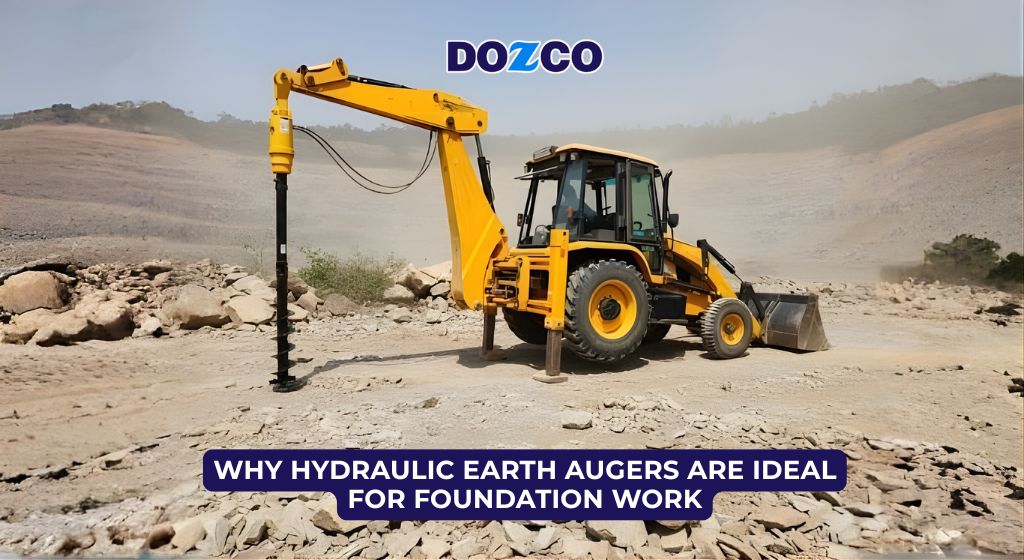
Foundation works demand precision, pace, and reliability. Whether you’re building a project in a congested city block or installing anchors out in a remote open field, you need to dig a precise hole every time. This also saves money and avoids rework. Hydraulic earth auger attachments are a reliable tool for such tasks. They drill faster, don’t drift off-centre while drilling, and reduce downtime compared with many manual or generic methods.
This article explains the common foundation challenges, what fleet owners struggle with, and how a quality auger attachment can help with them:
Foundation Challenges Contractors Often Face
City jobs bring tight access, underground utilities, traffic constraints, and strict noise or vibration limits. Operators must drill accurate, vertical holes in cramped areas and stop the moment they find any buried utilities, like water pipes or cable wires. Mistakes cost time and fines.
Remote or “deserted” zones, on the other hand, bring a different set of headaches:
- Long travel and mobilization,
- Unpredictable ground (from soft fills to hidden rock),
- Limited spare parts, and
- Large swings in weather or water table.
When a machine stalls or the earth auger attachment fails, getting parts to the site can take days. And the project loses momentum.
Besides keeping bores vertical, clearing spoils quickly, avoiding tool damage, and minimizing machine idle time are common challenges in both landscapes.
What contractors struggle with when using the earth auger attachment
While an earth auger attachment is powerful, it still comes with vulnerabilities. For instance:
- Often time operators continue to use the same tool for different grounds. The cutting teeth or bits wear fast in mixed fill, while flights choke in sticky clay.
- While drilling, a rotating auger can suddenly hit embedded rock or hard surfaces. This causes the attachment to experience a sudden shock load. If it happens frequently, it can damage the teeth, and the attachment needs frequent servicing and maintenance.
- In some cases, operators need to remove one attachment and install another because the existing tool can’t handle changing ground conditions. Each swap takes time, requires labour, and may involve repositioning the machine. This impacts productivity and can increase the overall project completion time.
- On remote sites, contractors deal with long transport distances, limited fuel access, delayed spare parts, and higher mobilisation costs. Any breakdown increases fuel burn and idle time, pushing operating costs up quickly.
- In city projects, operators work in tight working spaces and in underground utilities. They need to abide by noise restrictions and strict safety compliance. Precision drilling becomes critical to avoid service damage, structural errors, or regulatory penalties.
How DOZCO hydraulic earth augers address those problems
At DOZCO, our earth auger attachments are designed with practical site needs in mind. The tooth shape helps cut through difficult soils. The pilot keeps the bit steady and centred. The flight clears the spoil efficiently. Strong retention systems reduce shock impact and prevent tooth loss.
- Controlled, consistent drilling: Hydraulic drive gives steady torque and smooth speed control. Operators can slow into compact layers and push through softer ground without wandering. That keeps holes straight and reduces rework.
- Match tooling to ground quickly: Modern auger systems let you change pilot types, tooth sets, and flight pitch to match soft clay, mixed fill, or abrasive rock. Using the right tooth geometry reduces chatter and speeds the job.
- Better spoil handling: Shallow-pitch flighting or longer flights ride spoil out of the hole instead of packing around the bit. That cuts clear-out cycles and keeps productivity up on deeper piles.
- Durability systems reduce tooth loss: Robust retention systems, for example, DOZCO’s Shock Lock™ lock teeth against impact and stop them from falling out under heavy shock. Fewer tooth failures mean fewer stoppages and less time walking to retrieve parts.
- Lower whole-job cost: With the DOZCO earth auger attachment, your cycle times become faster. Operators need fewer tool changes. The high-quality attachments have longer tooth life, which lowers the cost per drilling.
Conclusion
Foundation work can be challenging. Hydraulic earth augers provide contractors with a practical way to handle both environments. The attachments bring control, the right tooling options, better spoil handling, and durability that cuts downtime. For fleet owners, the payoff is predictable cycle times, fewer emergency part runs, and lower cost per hole. If you want a foundation solution that’s engineered for real site behaviour, start with the auger design (pilot, teeth, flighting) and retention system, and reach DOZCO to help you match that to your machine and ground.
FAQs
What ground conditions can hydraulic earth augers handle?
Earth augers are suitable for soft clay, mixed fill, compacted soil, and abrasive layers.
How can I reduce tooth wear and attachment damage during drilling?
Frequent shock loads from hidden rocks or hard strata accelerate wear. Using durable retention systems, such as DOZCO’s Shock Lock™, helps secure teeth under impact. Matching the correct tooth type to the soil also significantly reduces premature wear.
Are hydraulic earth augers suitable for congested urban construction sites?
Yes. Earth auger attachments offer controlled drilling and precision alignment make them suitable for tight spaces. Operators can manage torque carefully to avoid underground utilities and meet strict safety and compliance requirements.
Is it important to remove spoils as you drill?
Yes. Poor spoil clearance slows drilling and increases idle time. It prevents clogging in sticky clay and maintains a consistent cycle time.
Author Details